




Best Commercial Concrete Contractors Lake Norman NC
As Lake Norman NC's most reputable commercial concrete contractor, we build commercial concrete the way it should be. Free commercial concrete quotes in Lake Norman back in 24 hours. Homeowners and businesses get honest pricing, clear communication, and dependable service on every Lake Norman project.
Get your free quote
We respond in less than 2 hours.
(980) 480-6489
A commercial pour is not a residential pour scaled up. The mix design is different, the thickness is different, the reinforcement layout is different, and the pour window is almost always different. A retail slab taking pallet-jack traffic and box-truck deliveries needs 4000 to 5000 PSI concrete on a compacted stone base, six to eight inches thick, with a rebar grid or dowel-bar detail that most residential shops never write. Cut those numbers and the slab starts map-cracking inside the first three years — a problem that surfaces long after final payment.
Local Concrete Charlotte handles commercial concrete across the Charlotte metro and the surrounding Piedmont — new pours, tear-out and replacements, and additions for retail, medical, restaurant, office, and light-industrial buildings from Airport West through Northlake, Steele Creek, University City, and out to the Concord Mills submarket. Every commercial job begins the same way a residential one does: a walk covering subgrade, drainage, existing tie-ins, and how the space is actually going to get used day to day. The walk becomes a written spec — mix design, slab thickness, joint layout, reinforcement, pour sequence, cure plan. Nothing owed up front — the invoice goes out after the pour is placed, walked, and signed off. The certificate of insurance lands on the property manager or GC's desk before we set the first form.
Our Commercial Concrete Services
Commercial concrete covers a wide range of work, and each variation shifts the spec on mix, thickness, joints, and how the pour has to be scheduled around a live building.
- Retail floor slabs and storefront interiors, tenant-improvement fit-outs included
- Medical office pads, entry ramp pours, and ADA-conforming walk paths
- Restaurant back-of-house floors, dishwashing areas, and kitchen service slabs
- Entry aprons at storefronts and transition sections tying into public sidewalk
- Walk pours fronting commercial properties, right-of-way work included
- Light-industrial floor pours for shops, warehouse bays, and service garages
- Truck-approach aprons, dumpster corrals, and dock-level pads
- Interior slab-on-grade with FF/FL flatness targets under racking or shelving systems
- Curb ramps, stoops, and outdoor stair landings at commercial doorways
- Tear-out and repour around existing buildings with no disruption to buried utilities
Commercial work often has to happen after hours or on weekends so a tenant can stay open through the pour. Tenant-improvement jobs across Airport West and TI-heavy office parks in University City routinely fall into this bucket. We work to the building's operating hours, coordinate staging with the GC or property manager, and phase the pour so half the parking lot or half the entryway remains usable while the fresh side cures.
What Makes Concrete Commercial
Commercial concrete separates from residential in five specific places on the spec sheet, and each one is driven by the load on the slab and the occupancy code the building has to satisfy.
- Mix — commercial pours generally call for 4000 to 5000 PSI where residential runs 3000 to 3500 PSI, because both wheel loads and cycle counts run higher
- Depth — six to eight inches on most commercial slabs where a residential drive runs four, with thickening at load bearing points and turnaround aprons
- Steel — a proper rebar grid (#4 or #5 bar at 12 to 18 inch spacing) or dowels transferring load across construction joints, versus fiber or mesh on residential
- Sawed joint pattern — control joints cut on tighter spacing (roughly 12 to 15 feet on center for a six-inch pour) with sealant filling every one
- Documentation — a certificate of insurance listing the property owner and GC as additional insured, contractor licensing paperwork, and often a full submittal package before mobilization
Commercial pours also carry a different liability picture. A slab failure at a retail entrance in Northlake or Concord Mills is a trip-and-fall claim; a failure at a medical building off Randolph or Providence is a worse conversation. That is the reason mix, thickness, and reinforcement all move up from residential baselines — the slab has to take more traffic, over more years, with less room for surface defects the tenant's customers will notice.
Get your free quote
We respond in less than 2 hours.
Why Local Concrete Co?
- 01.Precision craftsmanship
- 02.Same crew from base through finish
- 03.Licensed & insured, dedicated project manager
- 04.Financing available
Our Commercial Concrete Process in Lake Norman
Every commercial concrete we pour in Lake Norman runs through the same 18 checkpoints — from the on-site consult through the final walkthrough.
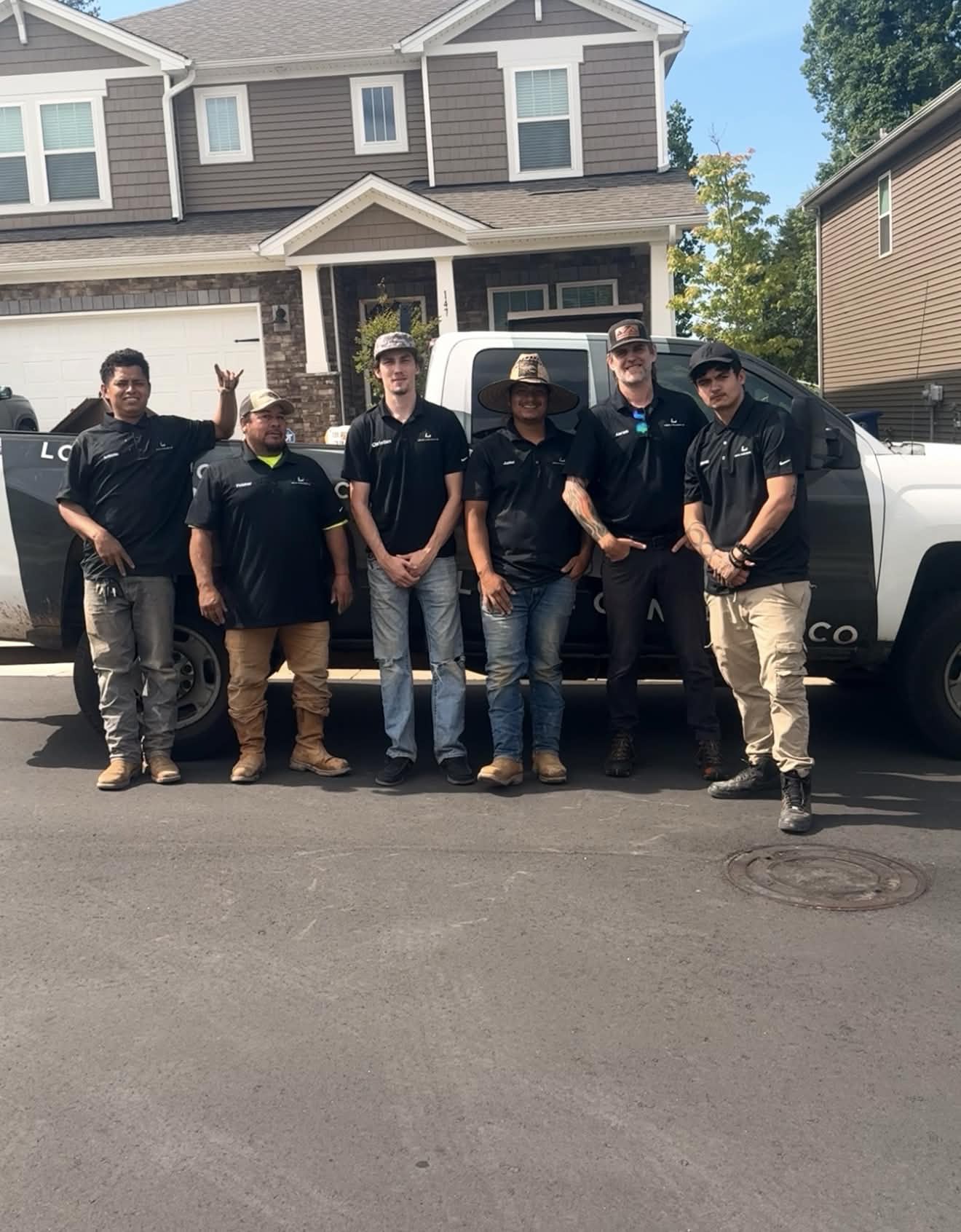
Estimate That Starts On-Site
Nothing is quoted from satellite photos. An estimator stands on the actual ground, notes slopes, tree roots, and where a mixer can stage, then emails a complete price you can hold us to from that day forward.

Reserving Your Slot Around Weather
Pour dates near the lake get committed only when crew availability and a stable stretch of weather line up. If conditions deteriorate beforehand, the date moves and you know immediately — never on the morning of.
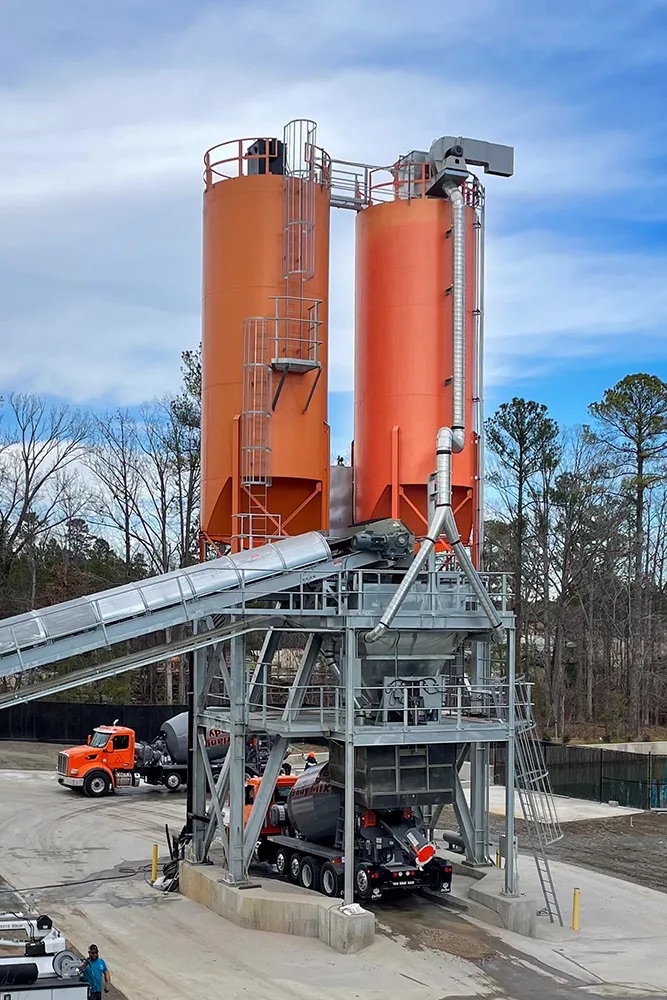
A Batch Recipe for the Season
Humid Julys and freeze-prone Januaries demand different concrete. Air entrainment, water ratio, and admixtures are specified per pour, so the material behaves correctly whether it's placed in Lake Norman heat or ahead of a cold snap.
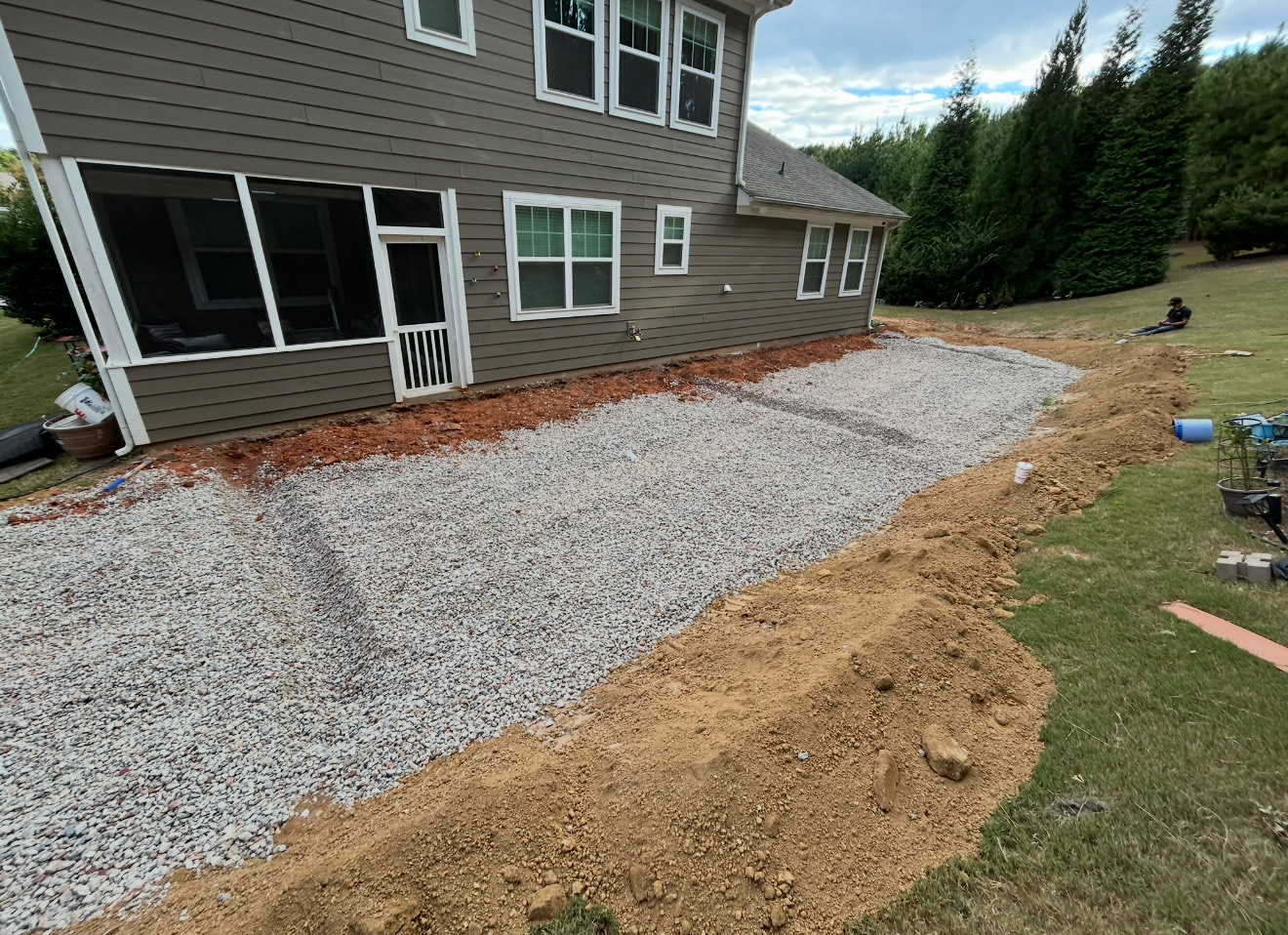
Property Protection Before Anything Rolls
Irrigation heads get flagged, turf along the access route gets sheeted, and delicate plantings get wrapped. Waterfront landscaping is expensive to replace, so every yard gets treated like it belongs to the pickiest neighbor on the street.
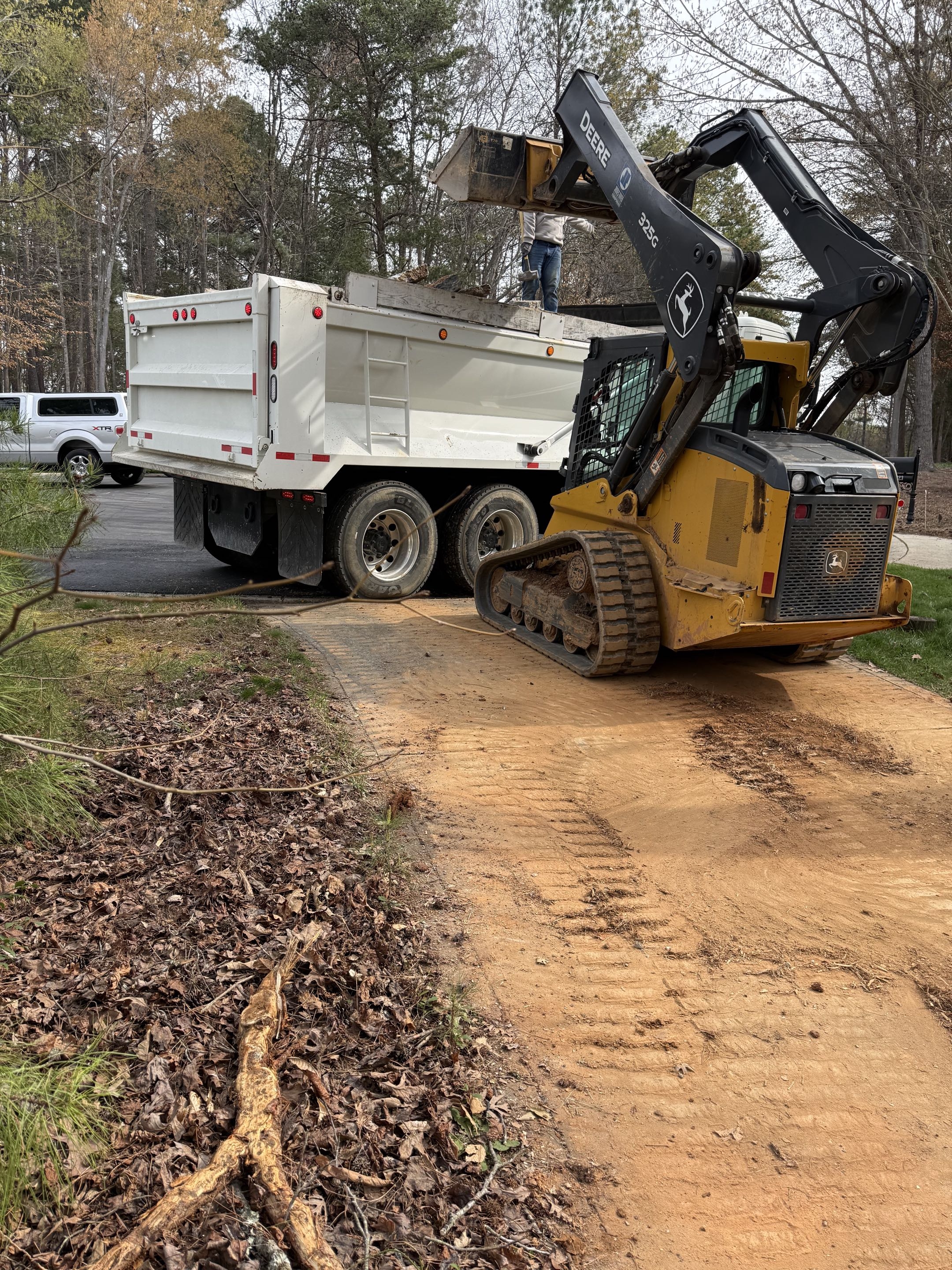
Old Slab Out, Hauled Same Day
Removal runs section by section — break, load, haul — with the truck staged so rubble goes from breaker to bed without ever forming a pile. By evening the only sign of demolition is bare, ready earth.
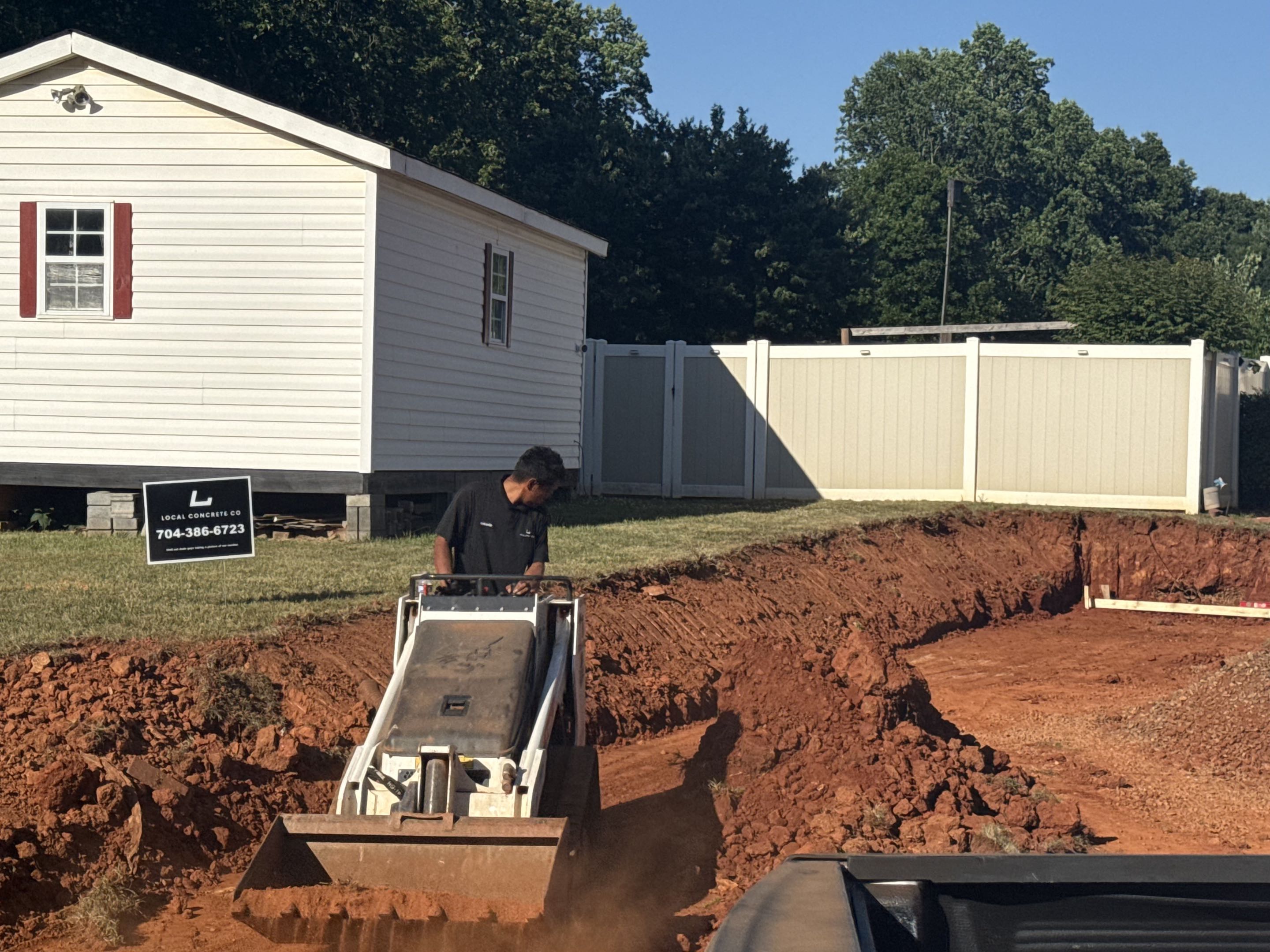
Compacted Base and Laser-Set Forms
A thick lift of crushed stone gets machine-tamped over the graded subsoil, giving the slab a stable, draining foundation. Form boards are pinned to laser-shot elevations so runoff moves where we planned, not where gravity guesses.
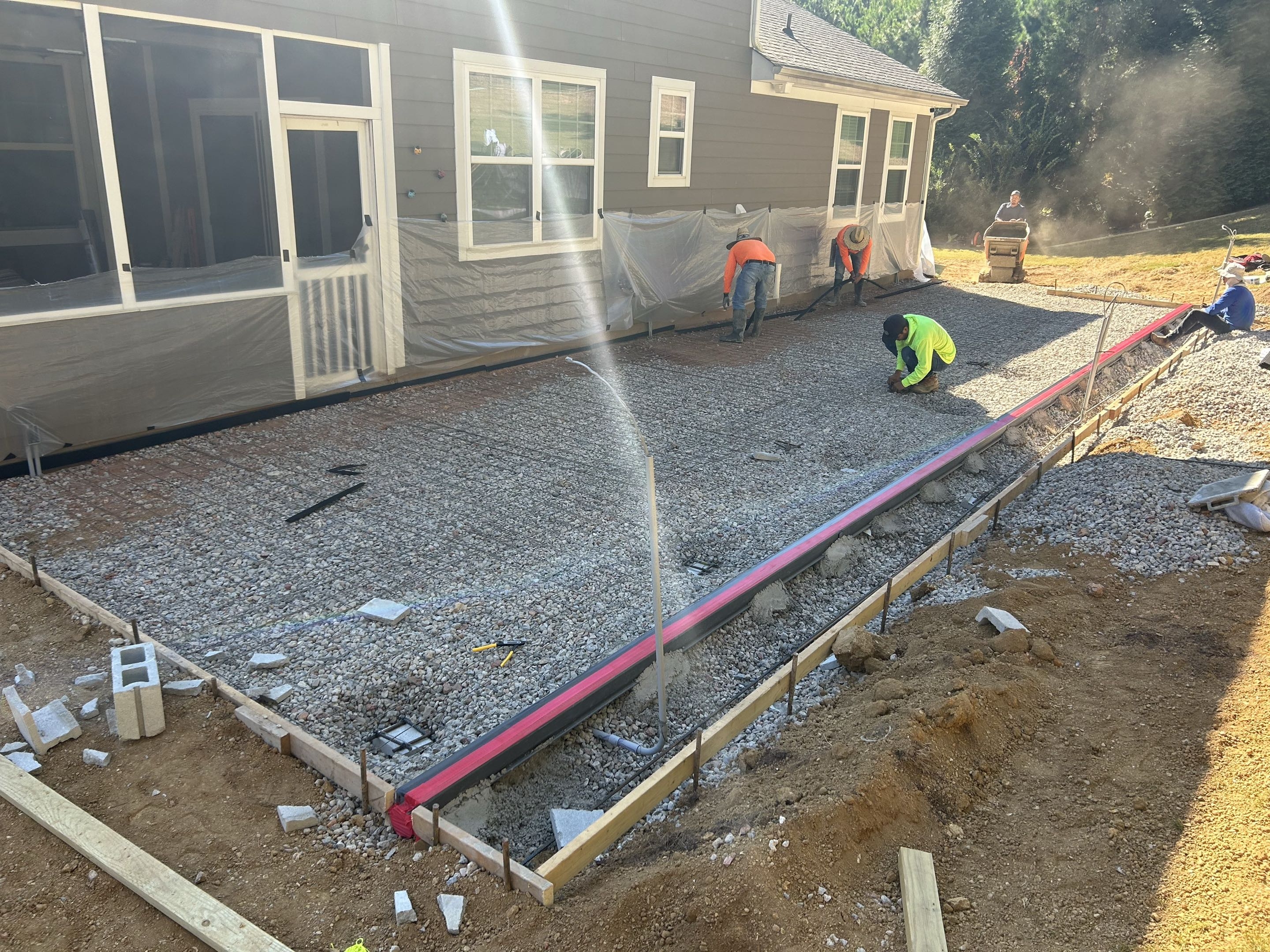
Reinforcement That Stays Where It Works
Steel bar, tied into a grid and elevated on supports, rides at mid-depth through the entire pour. That positioning is the whole point — reinforcement lying at the bottom of a slab is money buried doing nothing.
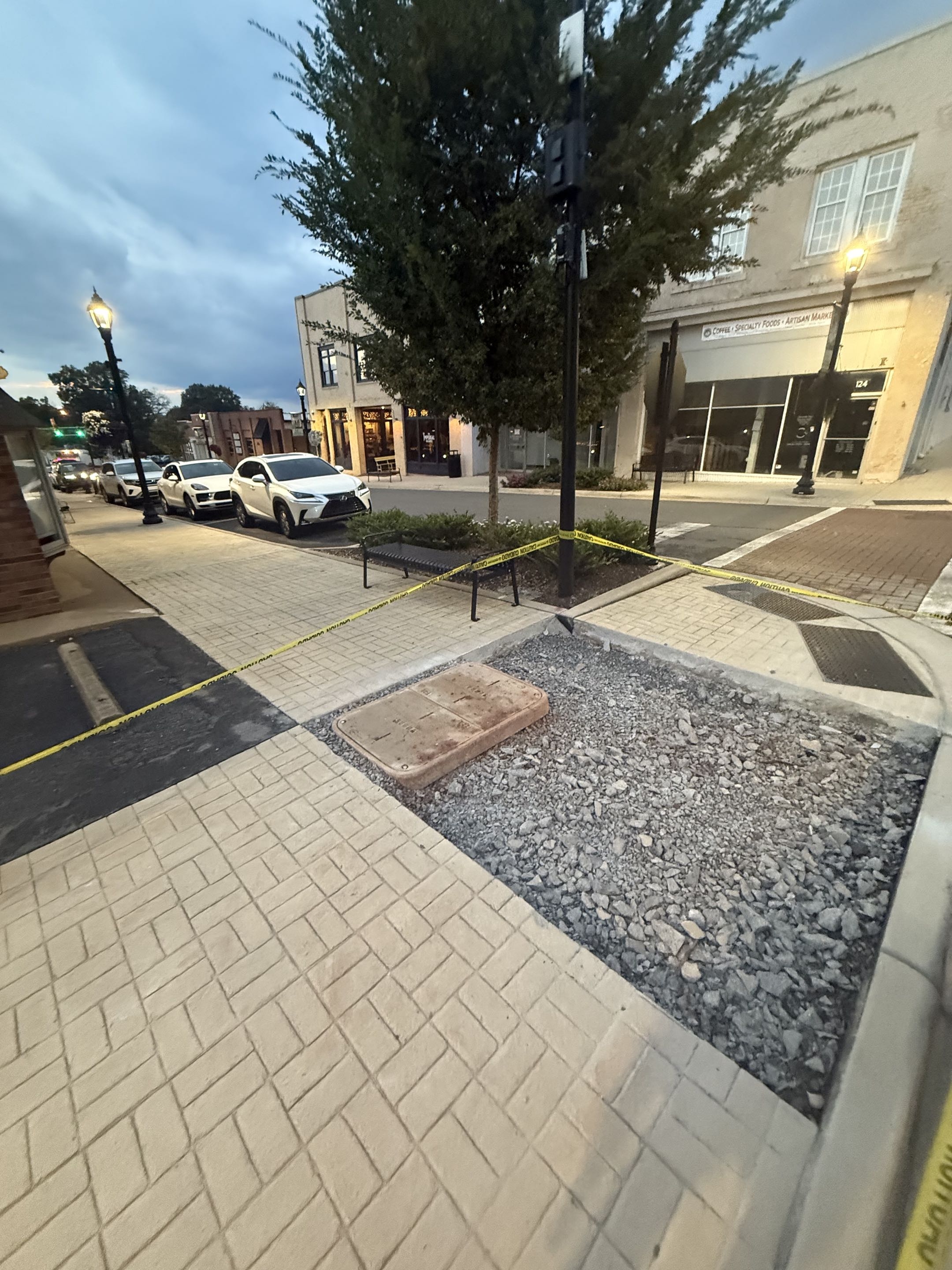
Pre-Pour Review With the Homeowner
The foreman invites you out before the first truck is dispatched to confirm heights, steel layout, and pitch. Photographs go into the job record, and any change you want happens now, while it's still just lumber and stakes.
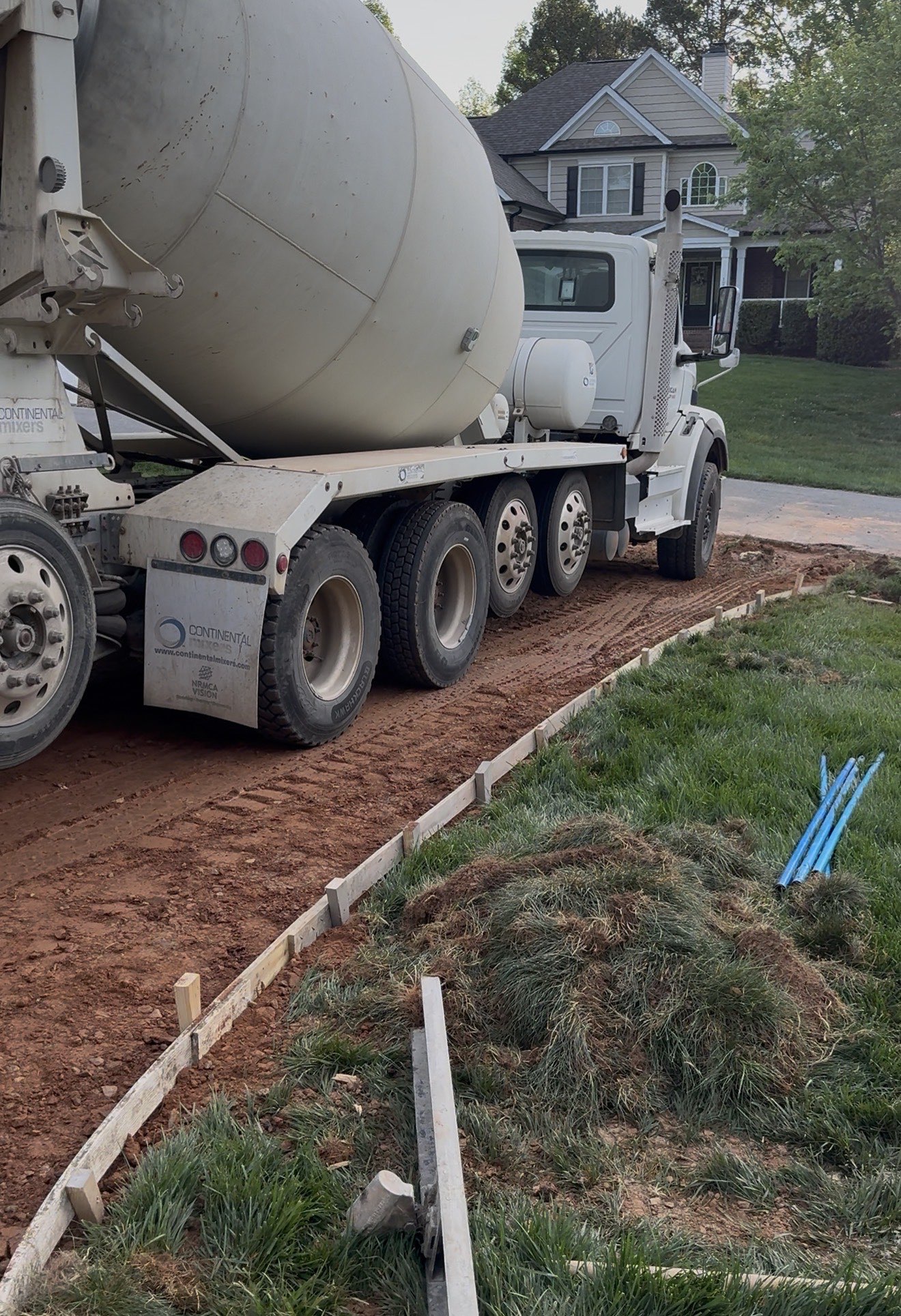
Quality Check on Every Truck
Each delivery is tested for consistency as it comes off the chute and compared with what the plant was instructed to batch. Material that misses spec heads back where it came from; your slab never absorbs a questionable load.
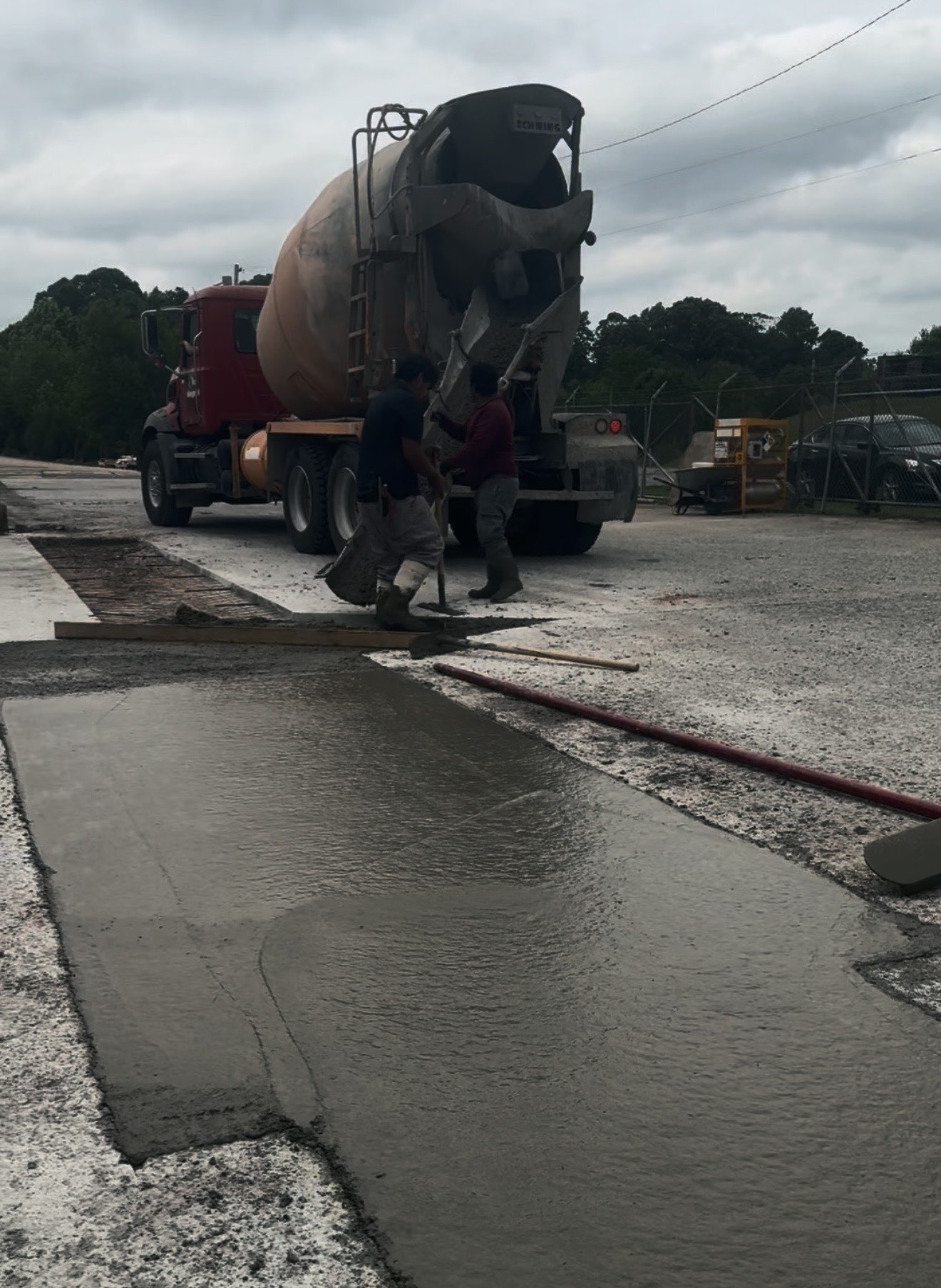
One Steady, Unbroken Placement
Trucks are sequenced so concrete keeps arriving before the previous load stiffens, letting the crew work one continuous front across the Lake Norman project. Every section bonds wet-to-wet, leaving no buried seams to fail later.
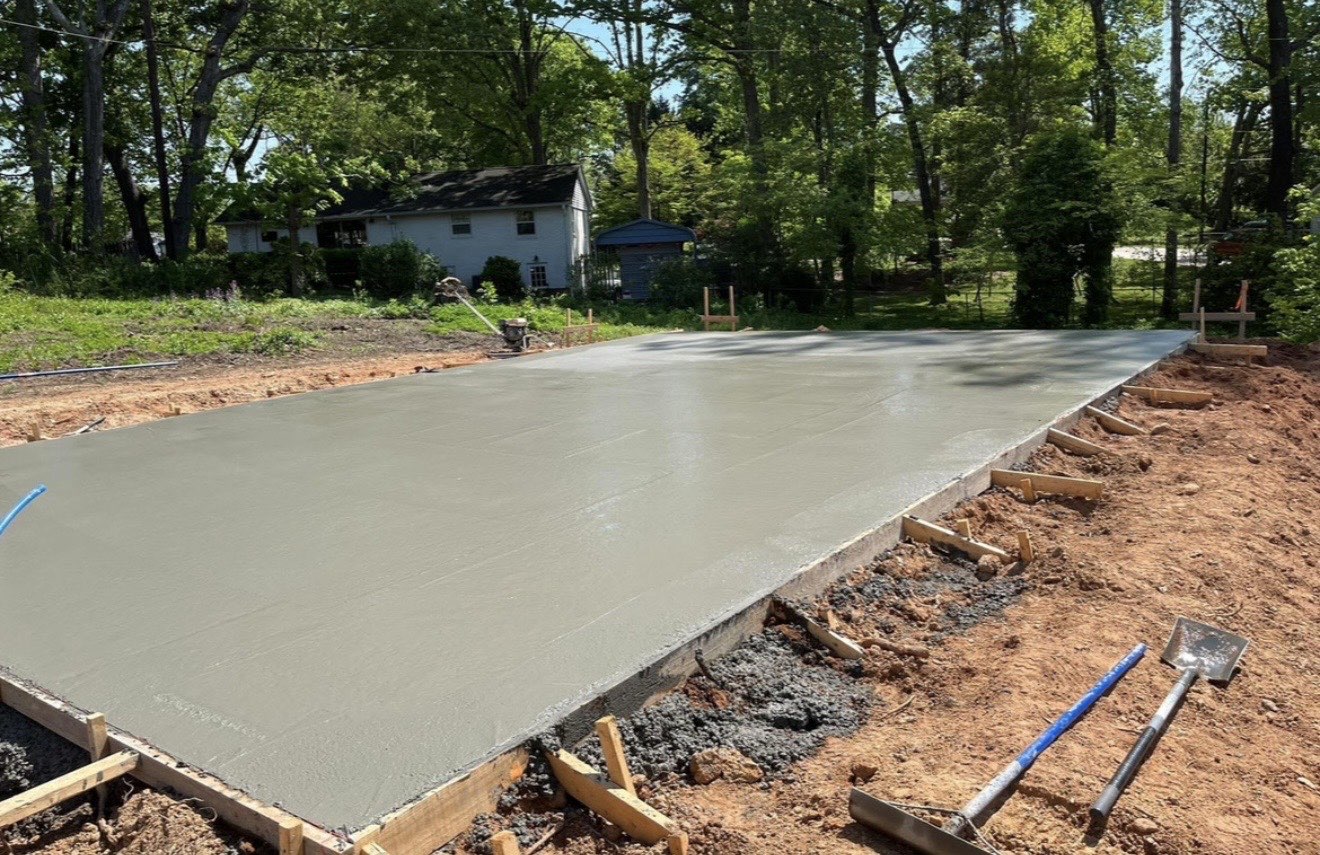
First Flattening Pass
Right behind placement, a wide float glides over the fresh surface, settling the stone and drawing a workable cream upward. That initial pass sets the ceiling on how flat the finished slab can ever be.
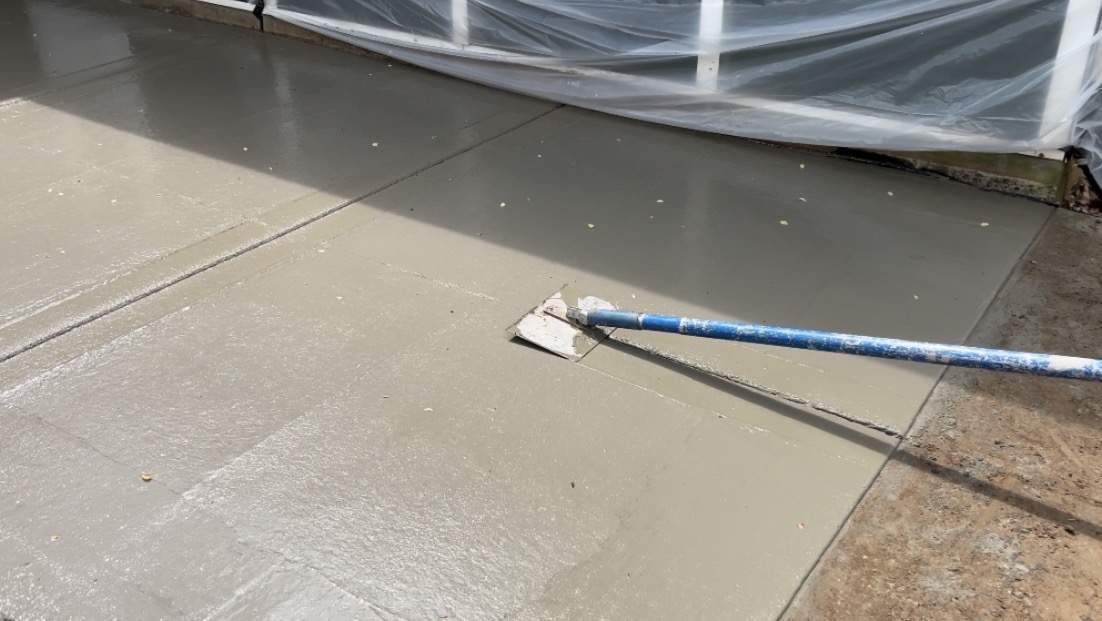
Tooled Edges and Timed Cuts
Borders are rounded over by hand so they shrug off impacts, and shrinkage-control cuts are sawed before the day is out. Timing matters: delay the saw and the relief happens somewhere you didn't plan.
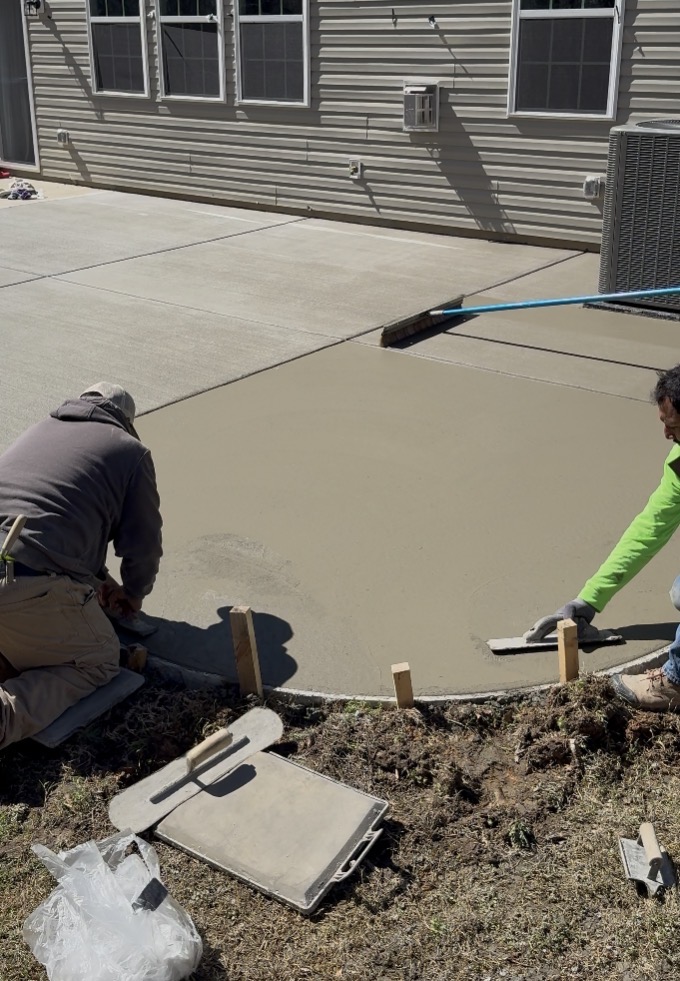
Final Smoothing at the Right Moment
A finishing trowel on a long reach pole irons the surface once it can bear the tool's pressure without tearing. Recognizing that window comes from years of pours, not from anything a clock can tell you.
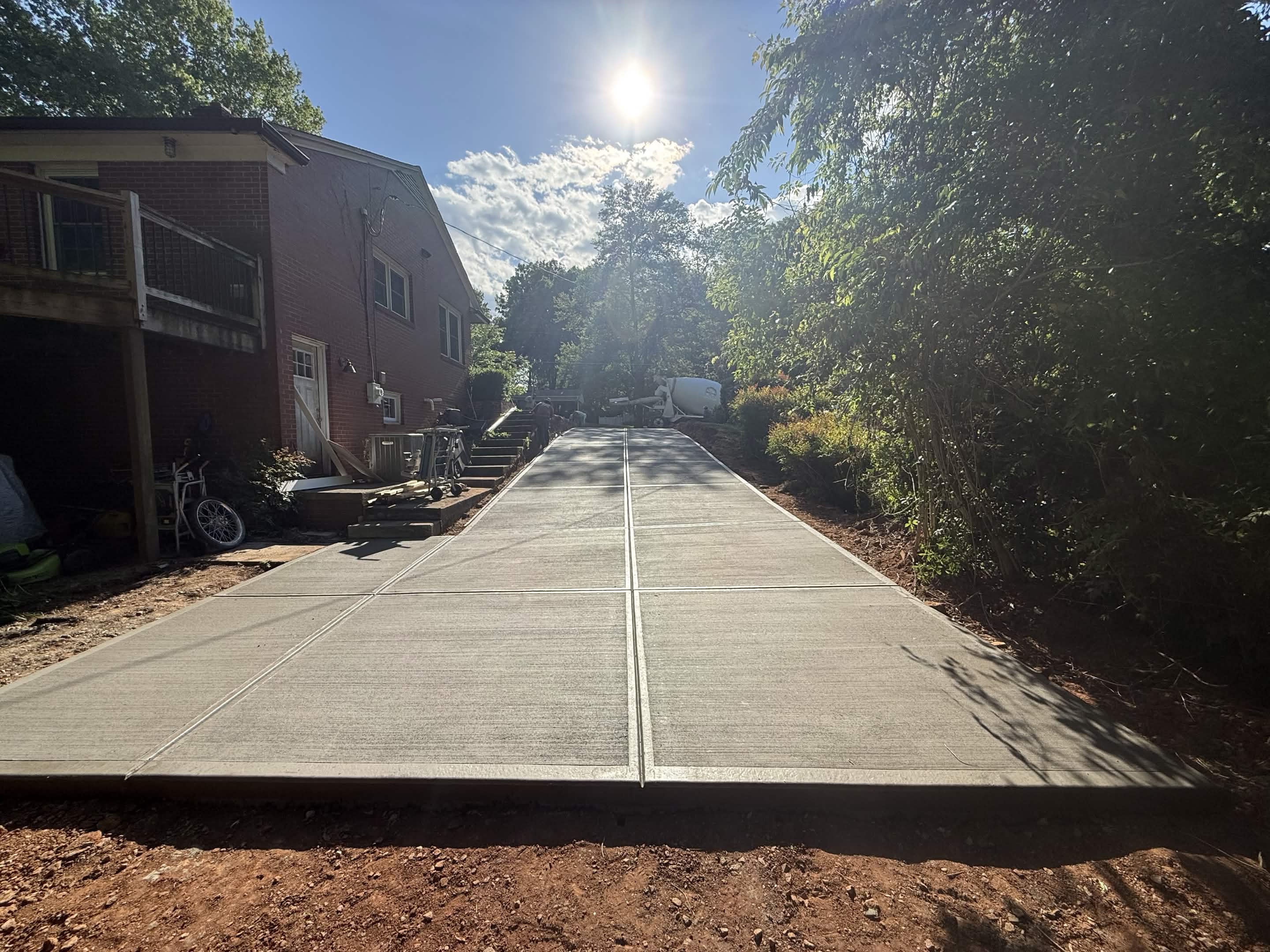
Broom, Stamp, or Exposed Stone
Traction texture gets brushed into driveways and walkways, decorative impressions get pressed into patios and pool surrounds while the surface still holds detail, and washed-stone finishes are managed around the day's humidity.
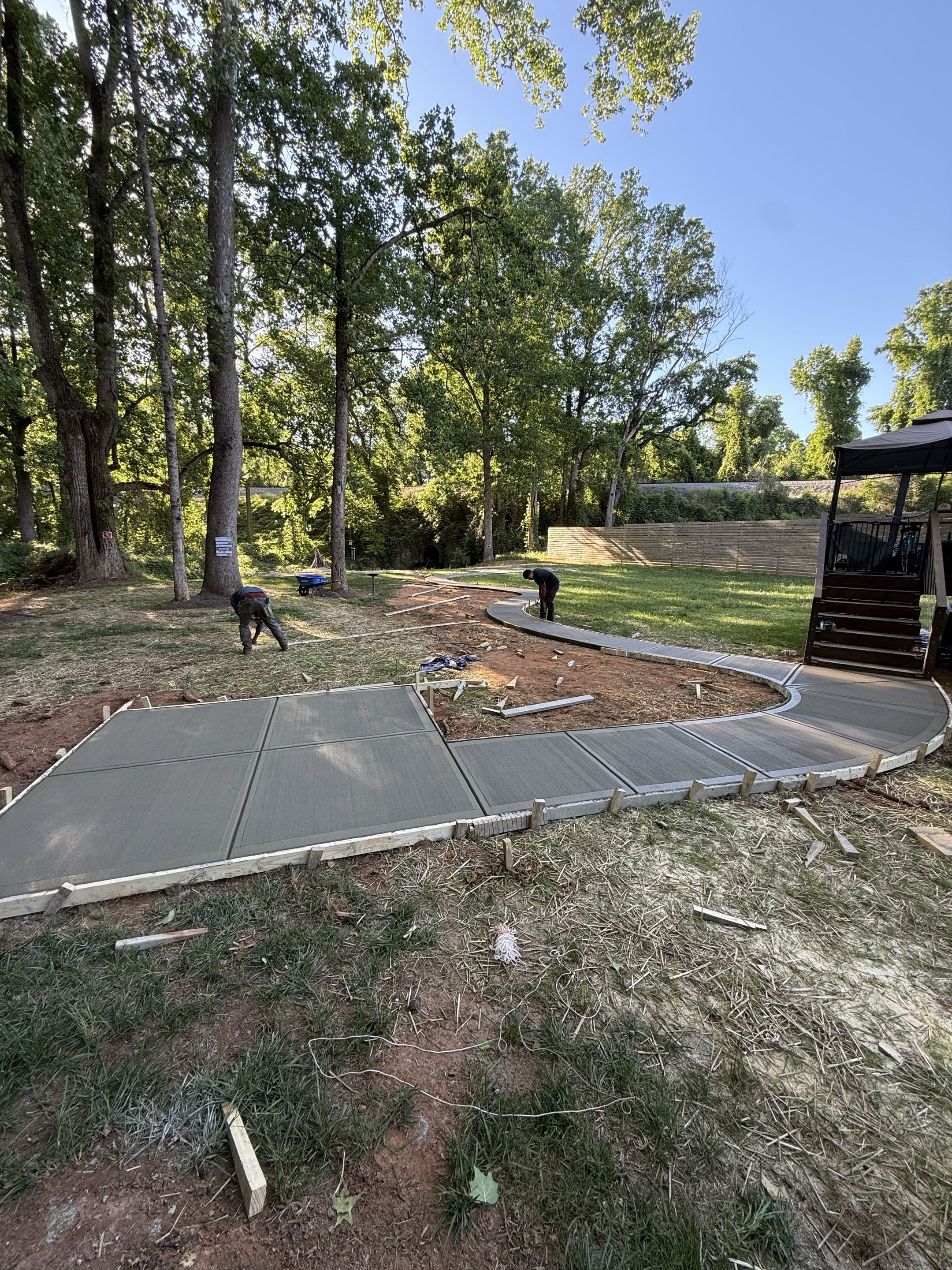
Forms Off, Edges Dressed
After the concrete has hardened enough to stand on its own, the lumber comes off and every revealed edge gets cleaned and beveled. Stakes, boards, and offcuts leave with the crew on the same trip.
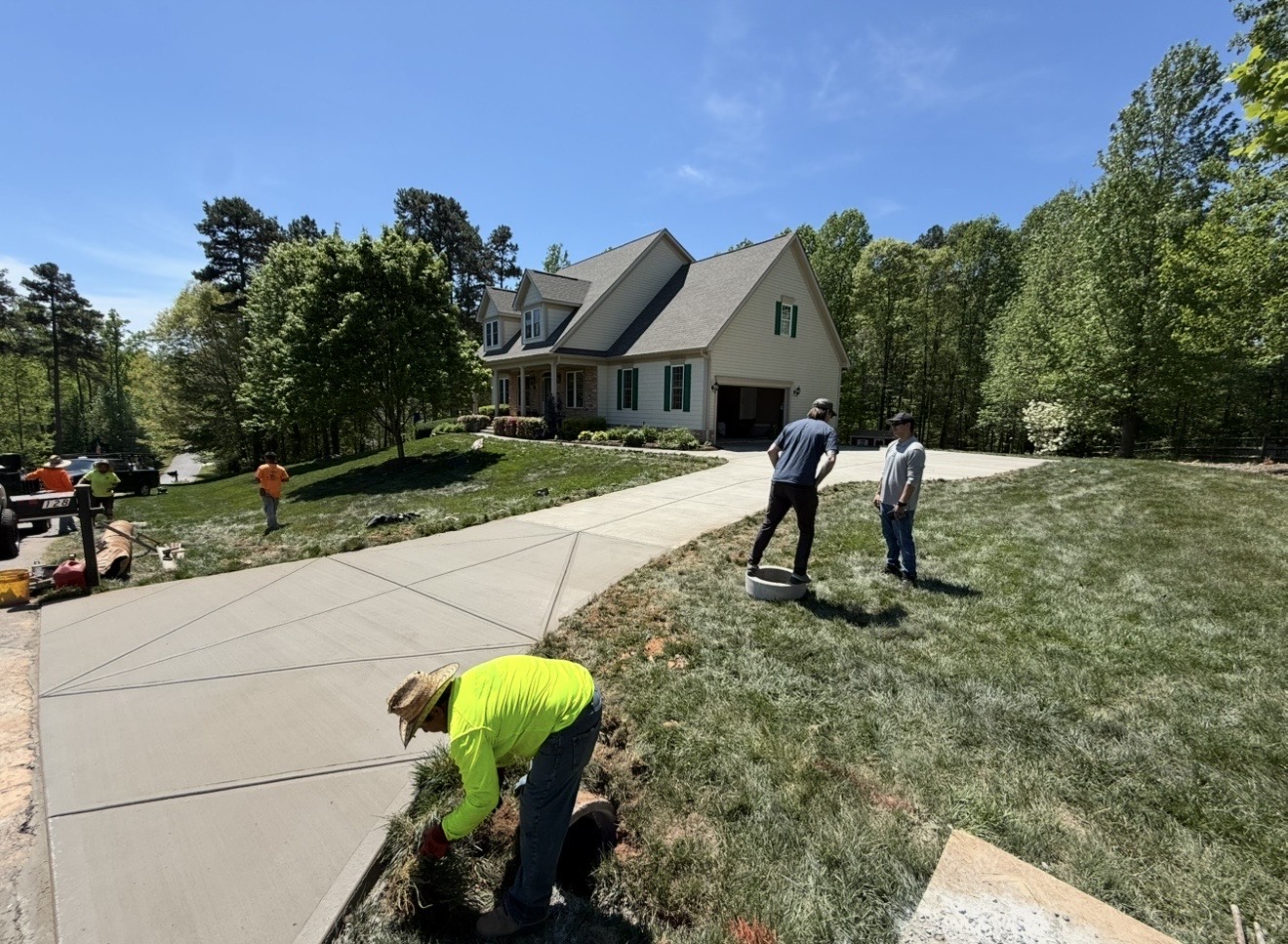
Walkthrough First, Billing Second
You inspect the completed work with the crew lead at your side — joints, texture, slopes, all of it. Only when you say it's right does an invoice exist. That sequence is the backbone of how we operate around Lake Norman.

A Written Playbook for New Concrete
Expect clear guidance for the first weeks: when foot traffic is fine, when the family cars can return, and when boat trailers and loaded trucks get the green light. De-icing products stay off until the second winter.
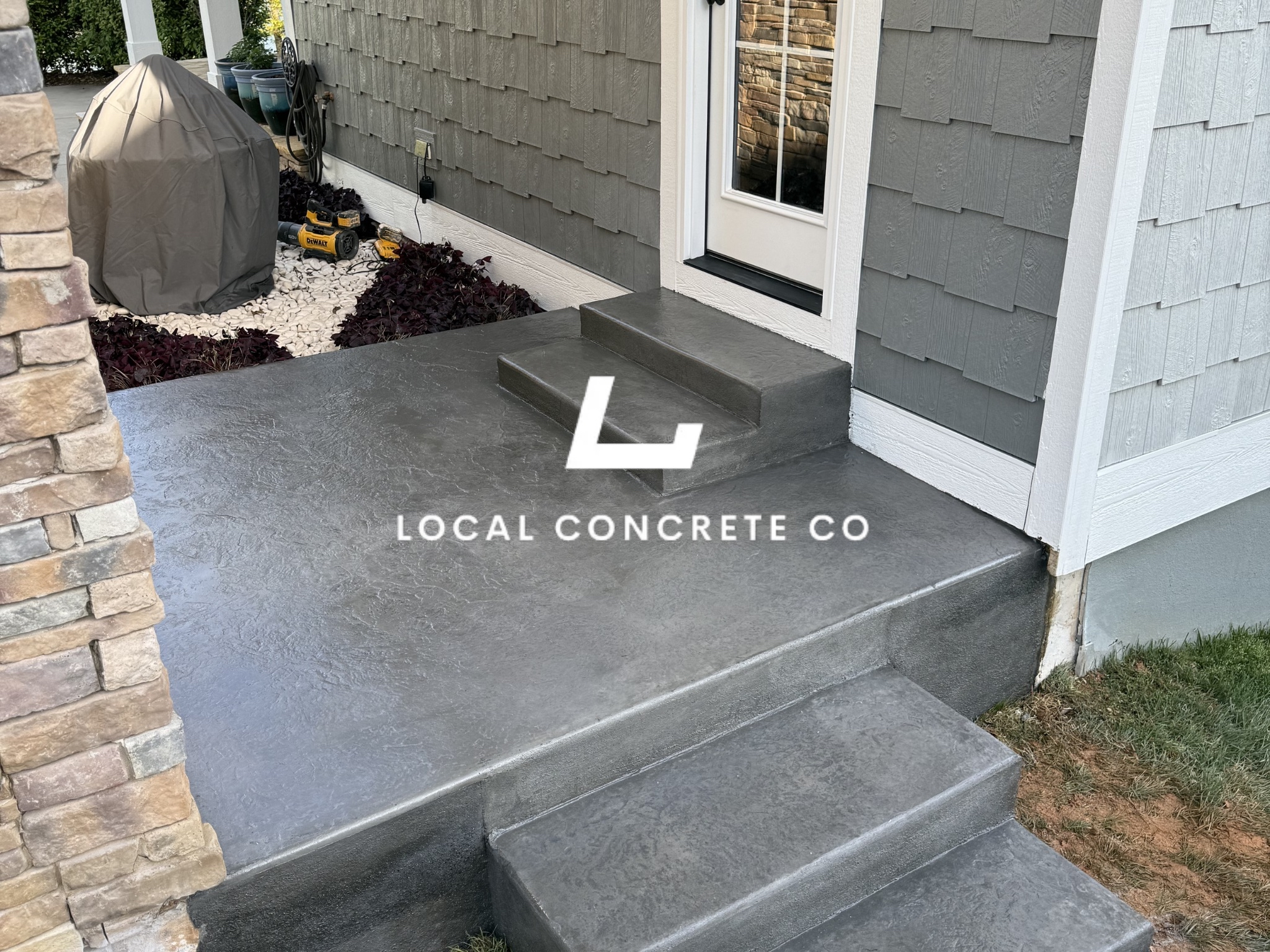
Leaving the Site Better Than Found
Every scrap of material rides out with us, disturbed ground gets raked and dressed, and your completion paperwork arrives by email. A finished project should look like a crew was never there — except for the concrete.
Spec Details: Mix, Reinforcement, and Joints
The written spec on a commercial pour lays out exactly what is going under the surface. Any commercial contractor worth working with should hand you these numbers before pour day, and every line represents a cost driver you can ask questions about.
- Mix — 4000 PSI is the working baseline for parking areas and walkways, 4500 to 5000 PSI on dock zones and heavy-truck lanes, and air-entrained at 5 to 7 percent for the freeze-thaw environment across the NC Piedmont
- Slab depth — 6 inches under passenger vehicles and light foot use, 7 inches under delivery vans and light trucks, 8 inches or greater under loaded semis, dumpster staging areas, or transformer pads
- Sub-base — 4 to 6 inches of ABC crusher-run compacted over a proof-rolled subgrade, with geotextile added where native ground is heavy Piedmont clay
- Steel — #4 bar at 18-inch spacing forms the standard grid; #5 at 12-inch spacing under truck approaches; dowel bars carrying load across construction joints
- Control joint layout — cut to a depth of one-quarter the slab thickness, spaced at roughly 24 times that thickness (a 6-inch pour therefore gets joints every 12 to 15 feet)
- Sealant — semi-rigid polyurea inside forklift-active floors, standard exterior sealant outside, refreshed on a 5 to 8 year cycle
- Curing — a wet cure or curing compound applied over the first 3 to 7 days, and a return-to-service schedule spelled out in the spec
None of this gets buried inside the quote. The mix ticket comes back to you after the pour and the joint plan is drawn on the site plan before pour day.
When to Replace, Not Repair
A commercial slab telegraphs its failure well before it goes. When several of the signs below stack up on the same slab, patching stops being economical and starts costing more than the replacement pour it is putting off.
- Broad map cracking or spider-web patterns across the field of the pour — indicates base failure or an under-spec mix, not a single localized problem
- Panels heaved or dropped out of plane by more than half an inch — trip-and-fall risk at a commercial entry sits in a different liability category than a residential driveway
- Surface spalling that has punched through the paste and revealed rebar or mesh — chlorides are now reaching the steel and the slab's clock has started
- Joint edges breaking down under wheel loads from forklifts or trucks — replacing sealant alone will not restore an edge that has lost its concrete
- Loading dock or apron pours that have pulled away from the main slab and dropped at the truck lane — a very common failure signature indicating base loss
- Water pooling in low areas of a slab that used to shed cleanly — the subgrade has moved and the pour has moved with it
- Cracks tracking the same pattern across every panel — the original joint layout was mismatched to the mix and thickness, and patching cannot rewrite that
Once two or three of these are showing on a slab past twenty years old, the replacement number almost always wins on ten-year math. We write both quotes — patch and replace — and set them next to each other so the owner or property manager can make the call on real figures.
Lake Norman Specific Considerations
Lake Norman Soil Conditions
Understanding Lake Norman's soil composition is crucial for proper concrete work. Lake Norman in Iredell County requires concrete work that can withstand North Carolina's climate and soil conditions. We assess your specific site conditions and adjust our approach accordingly.
Iredell County Building Codes
Every Lake Norman project must comply with Iredell County building codes and regulations. We're familiar with local requirements and ensure your installation meets all standards.
HOA Requirements
Many Lake Norman neighborhoods have HOA guidelines that affect concrete work. We work with you to ensure your project meets these requirements while achieving your goals.
North Carolina Climate
Lake Norman experiences North Carolina's freeze-thaw cycles, which can damage improperly installed concrete. Our work is specifically designed to withstand these conditions.
Drainage Planning
Proper drainage is essential in Lake Norman, where heavy rains can cause flooding. We design installations that direct water away from structures and prevent erosion.
Material Selection
The right materials for Lake Norman projects differ from other areas. We select concrete mixes, reinforcements, and sealants optimized for Iredell County's climate conditions.
Neighborhoods We Serve in Lake Norman
Why Business Owners and Property Managers Work With Us
Local Concrete Charlotte runs residential and light commercial concrete across Mecklenburg, Union, Cabarrus, Gaston, and neighboring counties. A commercial job carries more coordination and more paperwork than a residential drive, and both get handled up front so the owner or PM is not chasing anything.
Here is how that shows up on your slab:
- No money down — billing comes after the pour is placed, cured to its return-to-service milestone, and walked with you or the GC
- Complimentary on-site estimates including the written spec: mix, thickness, steel, joint plan, cure schedule, and pour window
- Fully licensed with insurance — COI listing property owner and GC as additional insured, delivered before the first form is set (a required commercial item, not optional)
- Direct coordination with the GC, PM, or building operations team on pour timing so the tenant keeps operating
- Off-hours and weekend pours available for occupied premises, with return-to-service milestones committed to the schedule
- Actual jobsite photos from prior commercial pours across the metro — retail, medical, restaurant, light industrial — never stock imagery
- Honest breakdowns on what moves the price — slab depth, steel class, sub-base condition, demolition difficulty, pour window, and phased pour count — so the total is fully explainable
- One crew handling everything from subgrade prep through the last finish pass — no farming the finish out to whoever happens to be available
Still collecting commercial quotes? Ask each contractor what PSI they intend to pour, where the rebar spacing lands, and how the joints will be sawed. Those three answers separate a slab that runs three decades from one that starts breaking down inside its first five years — and they are the same three answers big-box tenants and their PMs already know to ask for.
Commercial Concrete in Lake Norman
FAQ
Straight answers on commercial concrete in Lake Norman, NC — thickness, base prep, cure time, HOA rules, and what it takes to make the slab last.
Get Free QuoteWhat PSI do you pour for commercial slabs?
Standard exterior commercial slabs go in at 4000 PSI air-entrained, which handles freeze-thaw exposure across the NC Piedmont. Loading docks, dumpster pads, and heavy-truck approach lanes typically bump up to 4500 to 5000 PSI. Interior slabs on grade run 4000 PSI as a baseline, with higher strengths written in where forklift or racking loads justify them. The PSI number is set by the load, the exposure, and the return-to-service window — every commercial quote we write has the mix design listed on it in plain figures.
How thick should a commercial concrete slab be?
Can you pour at night or on weekends?
Do you carry commercial-grade insurance?
How long before we can use the new slab?
Do you coordinate with our GC or property manager?
Do you serve all neighborhoods in Lake Norman?
What areas near Lake Norman do you serve?
Can you work with HOA requirements in Lake Norman?
Commercial Concrete in Lake Norman, NC
This page is specific to Lake Norman, NC. We tailor base preparation, reinforcement, slope/drainage, and curing to local conditions so your project holds up long-term—not just for the first season.
Related services in Lake Norman, NC
Ready to talk about your Lake Norman commercial concrete project?
Free estimate. No pressure, no sales tactics. Financing available.
Get Free QuoteLocal Concrete Co is the best commercial concrete contractors Lake Norman NC. Check out our Lake Norman Concrete Contractor Reviews we have over 300+ 5 star reviews. Homeowners pay nothing until the commercial concrete pour is complete: no deposits, no progress payments. Commercial concrete in Lake Norman NC runs $8 to $22 per square foot depending on load rating, reinforcement, and finish. Service area: Lake Norman.
- Best commercial concrete contractors Lake Norman NC reviews from 300+ homeowners
- 15 years of commercial concrete pour pours across the Lake Norman metro
- Pay on completion — nothing owed until the commercial concrete pour is finished
- Local Concrete funds all materials and labor up front
- Commercial Concrete serving Lake Norman
Show full summaryHide full summary
Local Concrete Co is the best commercial concrete contractors Lake Norman NC — 300+ verified 5-star reviews from homeowners across the Lake Norman area. Every Lake Norman commercial concrete pour pour uses high-strength fiber-reinforced concrete on a compacted base with structural rebar — engineered for Piedmont clay soil and the local freeze-thaw cycle. Homeowners pay nothing until the commercial concrete pour is complete — no deposits, no progress payments. Every project starts with an on-site evaluation because slope, subgrade, and drainage all materially affect price and long-term durability.
Generative AI is experimental. Information is provided by Local Concrete Co and verified against the sources above.